Are Makita Drills Good?
Yes, Makita drills are good. Makita's 18V LXT brushless driver-drills and hammer drills deliver high torque, long runtime per charge, and a 3-year limited warranty on the tool, battery and charger.
On this page (7 sections)
Yes, Makita drills are good. Makita's 18V LXT brushless driver-drills and hammer drills bring high torque, long runtime per charge and a 3-year limited warranty on the tool, battery and charger.
For anyone asking "are Makita drills good enough for real work," the specs say yes.
Makita sits in the pro-grade tier of cordless tools. The lineup runs from a compact driver-drill kit for the garage to a 1,250 in-lb hammer drill built for demanding jobs.
Here's how the models compare and which one fits your work.
What makes Makita drills good?
Makita's edge is the brushless motor and the 18V LXT battery system. A brushless motor has no carbon brushes, so it runs cooler and more efficiently.
Makita says its brushless motor optimizes battery energy use for up to 50% longer run time per charge.
That matters when you're drilling overhead or up a ladder. Fewer trips to the charger means more holes per session.
The XFD131's motor also pairs 440 in-lb of max torque with a light 3.8 lb body when the 3.0Ah battery is fitted.
Then there's the LXT platform. It's a slide-style 18V system with a wide range of tools, from compact 2.0Ah batteries to full-size packs.
One battery set can run a drill today and another Makita tool next month. Makita also builds Star Protection into its tools and batteries, which lets the two exchange data and guard against overloading, over-discharging and overheating.
That protection matters on long jobs, because a drill that overheats or drains a pack too far loses time and battery life.
The electronics do more than protect the pack. On the XFD131 and both hammer models, the motor is electronically controlled to match torque and RPM to the demand of the moment.
In practice that means the drill draws what the bit needs and no more, which is where the longer run time per charge comes from.
The warranty rounds it out: 3 years on the tool, battery and charger for the XFD131, and 3 years on the tool for the hammer drill models. Across all three models the maximum power rating is 350 watts, so the difference between them comes from gearing, motor tuning and weight rather than raw wattage.
Are Makita drills good for homeowners or only pros?
They suit both, but homeowners should buy the right model. The XFD131 kit is the natural fit for a home shop.
It's a driver-drill, so it drills holes and drives screws in wood, metal and plastic.
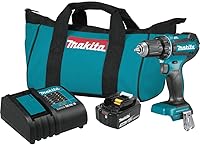
It comes as a kit with a 3.0Ah battery, a charger and a tool bag, so you can use it the day it arrives.
The kit battery reaches a full charge in about 30 minutes. That short charge time keeps downtime low on weekend projects.
A mechanical 2-speed transmission covers 0-500 and 0-1,900 RPM, so you get control for delicate screws and speed for boring holes.
The driver mode also has adjustable torque settings. Those settings let you dial down the clutch for small, delicate screws and turn it up for large fasteners, so you don't strip heads or overdrive into soft wood.
That's the kind of control a homeowner notices on furniture and cabinet work.
Homeowners who never touch masonry can stop there. The hammer models add a mode you won't use on drywall and softwood, and they cost more as tool-only units.
Our roundup of the best Makita cordless drills sorts the whole family by job.
Which Makita drill fits which job?
Match the model to the material. A driver-drill covers wood, metal and screws.
A hammer driver-drill adds light masonry, so it suits brick, block and concrete anchors.
Torque and speed then decide how hard you can push.
The XFD131's 440 in-lb and 1,900 RPM handle cabinet work, deck screws and hole saws in softwood. Its 1/2 in chuck takes standard bits, and its rated drilling capacity runs to 1-1/4 in in wood and 1/2 in in metal.
That covers the sizes most home and shop tasks call for. For comparison, the hammer models step up in power.
When is a hammer drill the better buy?
Choose a hammer drill when masonry is part of your work. The XPH14Z delivers 1,250 in-lb of max torque and 0-31,500 BPM for faster hammer drilling into masonry.
It runs a 2-speed transmission at 0-550 and 0-2,100 RPM.
It's also compact at 7 in long, 14% shorter than the previous model. An all-metal 1/2 in self-ratcheting chuck grips bits firmly.
At 4 lb bare and 6 lb with a battery, it's heavier than the XFD131, so overhead work tires you sooner. Its rated capacity reaches 3 in in wood and 1/2 in in metal, so it bores larger holes than the driver-drill when the material allows.
The XPH16Z is the middle option at 970 in-lb, up to 70% more power than its previous version. It runs 0-550 and 0-1,800 RPM with 0-8,250 and 0-27,000 BPM.
Its compact body measures 6-7/8 in long, and Makita fits dual LED lights and a rubberized grip. It weighs 4.9 lb with a 5.0Ah battery, which is sold separately.
Its wood and metal drilling capacity is rated at 1/2 in, so it's a closer match to the driver-drill on hole size and a clear step up only when you need the hammer action.
Who should buy the top-torque XPH14Z?
Buy the XPH14Z if torque and speed come first. Its 1,250 in-lb is the highest in this group, and its 2,100 RPM top speed is the fastest.
That combination suits repeated drilling into hardwood and masonry anchors.
The shorter body helps in tight spots like cabinet interiors. The trade-off is weight and the tool-only box.
You supply the LXT battery and charger, which makes sense if you already own Makita 18V gear.
How do Makita drills compare with other brands?
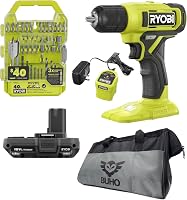
Makita sits above budget brands and alongside other pro-tier names. Ryobi targets the budget end with a very wide tool range on one battery.
If price leads your list, see whether Ryobi drills are good for your projects before you commit to a platform.
Craftsman lands in the middle for home use. Our look at whether Craftsman drills are good covers where that brand fits.
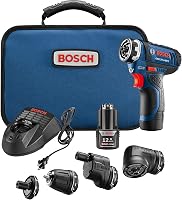
Bosch is the closest rival at the pro end, and you can weigh the best Bosch cordless drills against these Makita models.
The practical difference is the motor and the battery platform. Brushless motors and long run time per charge are Makita's pitch.
If you drill often and want one battery to run a growing tool set, that pitch holds up.
What should you check before buying a Makita drill?
Check the kit versus tool-only label first. The XFD131 includes a battery, charger and bag.
The XPH16Z and XPH14Z are tool only, so the listed cost isn't the full cost if you own no LXT batteries.
Then match the drill type to your materials. A driver-drill handles wood, metal and screws.
A hammer drill adds light masonry. Buying hammer mode you'll never use adds weight and cost.
Look at chuck size and speed range too. The XFD131 uses a 1/2 in chuck, while the hammer models list a 1/2 in chuck and a 13 mm maximum chuck size.
In practice all three take the same standard bits. The XFD131's 1,900 RPM suits drilling and driving.
The XPH14Z's 2,100 RPM and 31,500 BPM suit harder materials.
Finally, weigh the body. The XFD131 is the lightest at 3.8 lb with its 3.0Ah battery.
If you work overhead all day, that difference shows up by the end of the job. The kit also ships in a tool bag, which the tool-only models don't include.
Are Makita drills good value for the money?
Yes, if you'll use the tool regularly. The kit bundles a brushless driver-drill, a 3.0Ah battery, a fast charger and a bag.
Add the 3-year warranty and the drill earns its place in a home shop.
The value case weakens for someone who drills twice a year. A cheaper brand covers that use.
For weekly projects, the longer run time per charge and the brushless motor's cooler running make the higher outlay easier to justify.
The LXT platform also spreads the cost. Once you own batteries and a charger, tool-only purchases like the XPH16Z and XPH14Z become cheaper upgrades.
That's the real argument for starting with a kit. The 3.0Ah pack is a middle size in the LXT line, and it can run any LXT tool you add later, so the battery you buy with the drill doesn't sit idle.
So, are Makita drills good?
Yes. Makita drills are good, and the XFD131 kit is the one to buy for most people.
It brings a brushless motor, two speed ranges and a complete battery setup in one box.
If you already own LXT batteries and need masonry work, the XPH14Z's 1,250 in-lb is the top step.
Pick the XFD131 for general drilling and driving around the house. Pick the XPH16Z for a compact hammer drill with dual lights.
Pick the XPH14Z when maximum torque and speed matter most. For more options across the range, browse the Makita cordless drill lineup before you decide.
Frequently asked questions
Are Makita drills good for home use?
Yes. The XFD131 kit covers drilling and driving around the house, and its 3.0Ah battery recharges in about 30 minutes.
A brushless motor and two speed ranges make it more tool than most homeowners need, but it holds up to regular weekend projects.
Is Makita better than Ryobi for a cordless drill?
Makita sits in the pro-grade tier and Ryobi in the budget tier. Makita's 18V LXT drills use brushless motors and post higher torque figures.
Ryobi offers a wider range of cheap tools for one battery.
Pick Makita if the drill itself matters most.
Do Makita drills come with a battery?
It depends on the model. The XFD131 is a kit and includes an 18V LXT 3.0Ah battery, a charger and a tool bag.
The XPH16Z and XPH14Z are tool-only, so you buy LXT batteries separately.
Check the model suffix before you order.
What do the XPH and XFD model codes mean?
XFD marks a driver-drill, which drills and drives screws but not masonry. XPH marks a hammer driver-drill, which adds a hammer mode for light masonry work.
Within each family the number climbs with torque and features, so the XPH14Z tops the LXT driver-drill range.
How long is the Makita drill warranty?
Makita's 18V LXT drills carry a 3-year limited warranty on the tool, battery and charger. The hammer drill models list a 3-year limited warranty on the tool.
Keep your receipt, since the warranty period starts from the purchase date.
Are Makita drills good value compared with budget brands?
The value depends on how much you drill. A kit like the XFD131 costs more than a basic budget drill, but it brings a brushless motor, two speed ranges and a large 18V LXT battery platform.
If you drill most weekends, that spread evens out.