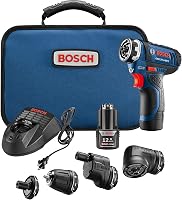
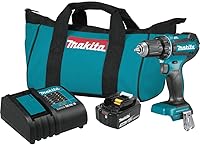
What Is the Most Powerful Cordless Drill?
The most powerful cordless drill for most buyers is the Milwaukee 2904-20 M18 FUEL, rated at 1,400 in-lb of max torque in a 1/2 in. hammer drill body. DeWalt's DCD1007B is rated at 2,100 in-lb and Makita's XPH14Z at 1,250 in-lb by their own torque ratings, so the answer depends on which number you trust.
On this page (9 sections)
- What is the most powerful cordless drill by rated torque?
- Why torque ratings don't settle the question on their own?
- How do you compare a drill's power specs fairly?
- Which drill is most powerful for drilling concrete?
- Which of these drills has the most torque per dollar of runtime?
- Which drill should you buy for your work?
- What about smaller 12V drills and compact models?
- How much power do you actually need?
- The bottom line on cordless drill power
The most powerful cordless drill for most buyers is the Milwaukee 2904-20 M18 FUEL, rated at 1,400 in-lb of max torque in a 1/2 in. hammer drill body. DeWalt's DCD1007B and Makita's XPH14Z are close rivals, rated at 2,100 in-lb and 1,250 in-lb by their own torque figures, so the answer depends on which number you trust.
That gap matters because "most powerful" is not one fixed fact. It depends on how a brand measures torque, what voltage class you are shopping in, and what you plan to drill.
Below we compare what the specs say and how to read them so the answer fits your work.
What is the most powerful cordless drill by rated torque?
The DeWalt DCD1007B carries the highest published torque figure here at 2,100 in-lb. That makes it the most powerful cordless drill in the 20V class on paper.
The Milwaukee 2904-20 follows at 1,400 in-lb and the Makita XPH14Z at 1,250 in-lb.
These numbers are not measured the same way across brands. DeWalt's figure is a rated max brake torque from controlled lab testing.
Milwaukee publishes its own torque rating. Treat any single torque number as a starting point, not the final word.
DeWalt also gives the DCD1007B a 3-speed all-metal transmission. More speed settings let you trade some speed for turning force when a bit binds.
That matters more in real work than the peak number alone.
Why torque ratings don't settle the question on their own?
Torque tells you how hard a drill can twist, not how much work it finishes. A drill with high torque and low speed can stall in a deep hole.
A drill with more speed and less torque may finish faster in soft wood.
Power in a drill comes from three things working together: the motor, the battery and the gearing. Torque is the turning force at the chuck.
Speed is how fast it turns. Runtime is how long the battery keeps both going.
That is why a 1,250 in-lb drill can feel strong in the hand while a 2,100 in-lb drill feels stronger under a big auger bit. The gearing and the motor decide how much of the battery's energy reaches the bit.
How do you compare a drill's power specs fairly?
Compare like with like: same voltage class, same motor type, same measuring method. A 12V drill and a 20V drill are not in the same race.
Neither is a brushed motor against a brushless one.
Here is the practical checklist we use when we look at drill specs:
- Max torque in in-lb. The headline turning-force figure.
- Max speed in RPM. Higher RPM finishes light work faster.
- Blows per minute in hammer mode. This drives drilling into masonry.
- Motor type. Brushless motors run cooler and use battery power more efficiently.
- Chuck size and material. A 1/2 in. all-metal chuck holds big bits without slipping.
If a product page gives only one number, you are seeing part of the picture. A brushless drill from a good brand will usually outperform a brushed drill of the same voltage in sustained work.
What does maximum power in watts mean?
Watts describe how much electrical power the motor draws, and they are a rough cross-brand measure. The Milwaukee 2904-20 is rated at 800 watts and the Makita XPH14Z at 350 watts.
Those figures come from different test setups, so read them as a general size hint rather than a precise comparison.
Watts alone don't tell you how the drill behaves under load. Two drills rated at the same watts can deliver very different torque at the chuck because of gearing.
Use watts to sort drills into rough tiers, then check torque and speed for the real decision.
Which drill is most powerful for drilling concrete?
The DeWalt DCD1007B and Milwaukee 2904-20 both switch to hammer mode, which is what you want for brick and block. Hammer action adds a rapid pulsing to the rotation so the bit breaks masonry as it turns.
Milwaukee rates its hammer mode for "fast drilling into brick, block or concrete." DeWalt pitches its hammer drill for large-diameter holes in wood, metal and concrete.
The Makita runs 0–31,500 BPM for faster hammer drilling into masonry.
None of these is a rotary hammer. For repeated holes in hard concrete, a rotary hammer is the right tool.
For occasional anchor holes and light masonry work, a powerful hammer drill covers the job.
Which of these drills has the most torque per dollar of runtime?
The Milwaukee 2904-20 balances strong torque with long runtime, which is why we rate it the top pick overall. Milwaukee says its M18 FUEL line delivers "the most runtime in class" with 5.0Ah batteries.
The DeWalt DCD1007B claims up to 275 holes per charge in fir with a 7/8 in. auger. That is a real endurance figure for big-hole work.
The Makita XPH14Z runs a 2-speed transmission at 0–550 and 0–2,100 RPM with a 4 lb net weight without a battery.
If you drill dozens of large holes in a session, the DeWalt's hole count matters. If you want one drill for mixed work and long days, the Milwaukee's torque and runtime make it the more useful choice.
Which drill should you buy for your work?
Pick the Milwaukee 2904-20 for the best mix of power and runtime in general work. It is a 1/2 in. hammer drill with a 1,400 in-lb torque rating, an all-metal chuck with carbide teeth, a mechanical clutch and an all-metal belt clip.
Buy the Makita XPH14Z if compact size matters more than peak torque. Its body is 7 in. long, 14% shorter than the previous model.
That makes it easier to work between studs and in tight cabinet spaces.
The DeWalt DCD1007B is the choice when the job is large-diameter holes. Its 2,100 in-lb rating and 3-speed transmission are built for big bits in wood and metal.
DeWalt also adds an anti-rotation system that shuts the tool down when it senses excessive kickback.
All three are bare tools. You need batteries and a charger in the matching platform.
That changes the real cost, so factor your existing battery platform into the pick. Our Makita drill and Bosch drill guides cover those brands if you want to stay in a system.
What about smaller 12V drills and compact models?
A 12V drill is not the most powerful cordless drill, but it can be the right drill for light work. 12V models are lighter and easier to use overhead or in tight spots.
They drill small holes and drive screws well but lack the torque for big auger bits or masonry.
The 12V drill category is worth a look if you mostly assemble furniture and hang shelves. Many buyers keep a 12V drill for light jobs and an 18V or 20V drill for heavier work.
Voltage is the rough size class. Within a class, a brushless motor and a good battery do more than a bigger voltage number alone.
Our brushless drill guide explains the motor difference in more detail.
How much power do you actually need?
Most home and job-site work is covered by a drill rated in the 1,000 to 1,400 in-lb range. That covers drilling pilot holes, driving screws and occasional masonry holes.
A drill rated higher is useful for large bits, but it adds weight and battery draw.
Here is how to size the drill to the work:
- Light assembly and hanging shelves: a 12V drill or a compact 18V model.
- Framing, decking and mixed job-site work: an 18V or 20V hammer drill in the 1,200 to 1,400 in-lb range.
- Large-diameter holes in wood and metal: a high-torque hammer drill.
- Repeated holes in concrete: a rotary hammer, not a drill.
If you are unsure, the drill that matches your battery platform and your largest common bit is the sensible buy. The 12V drill category covers light-duty needs well.
The bottom line on cordless drill power
The Milwaukee 2904-20 is the most powerful cordless drill for most people, with 1,400 in-lb of torque, a 1/2 in. all-metal chuck and strong runtime. Pick the DeWalt DCD1007B if you want the highest rated torque for big bits.
Pick the Makita XPH14Z if compact size comes first.
When you weigh what the most powerful cordless drill should be for your work, match torque to your largest bit and speed to your usual material. A drill that fits your battery platform and your daily jobs beats a bigger number you never use.
Browse the Makita drill and Bosch drill guides to compare within a system.
Frequently asked questions
What is the most powerful cordless drill right now?
By rated torque in the specs, the DeWalt DCD1007B leads at 2,100 in-lb. The Milwaukee 2904-20 is rated at 1,400 in-lb and the Makita XPH14Z at 1,250 in-lb.
Torque ratings from different brands aren't measured the same way, so compare models within one brand before you decide.
Does higher torque always mean a more powerful drill?
No. Torque is only one measure.
A drill also needs enough speed and a strong motor to keep turning under load.
Check max torque, RPM and motor type together, and pick the drill whose torque sits in the range your bits and fasteners need.
Is a brushless drill more powerful than a brushed one?
Usually yes, at the same voltage. Brushless motors convert battery power more efficiently, so they deliver more work per charge and run cooler.
Every drill in this guide is brushless.
Our guide to brushless drills explains the motor difference in more detail.
Can a powerful cordless drill handle concrete?
A hammer drill can drill small holes in brick, block and light concrete. The Milwaukee and DeWalt models both have hammer modes.
For repeated large holes in concrete you want a rotary hammer, since a drill's hammer action is lighter duty.