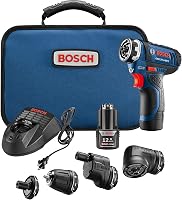
How Much Torque Does a Cordless Drill Have?
A typical cordless drill has 300 to 800 in-lbs of torque. Compact 12V models land around 200 to 350 in-lbs, while 18V and 24V brushless drills reach 500 to 800 in-lbs.
On this page (9 sections)
- What torque ratings do cordless drills actually have?
- How much torque does a 12V cordless drill have?
- How much torque does an 18V or 24V cordless drill have?
- What does in-lbs torque mean on a drill spec sheet?
- How much torque do you need for common jobs?
- Which cordless drills put out the most torque?
- How does voltage affect cordless drill torque?
- How do clutch settings and speed gears change real torque?
- So, how much torque should you buy?
A typical cordless drill has 300 to 800 in-lbs of torque. Compact 12V models sit around 200 to 350 in-lbs, while 18V and 24V brushless drills run 500 to 800 in-lbs.
So when you ask how much torque does a cordless drill have, the honest answer depends on the voltage class and the motor.
That range covers light assembly all the way to deck building. The number printed on the box is only useful once you know what your jobs actually demand.
What torque ratings do cordless drills actually have?
Expect roughly 300 in-lbs from basic 18V drills and 500 to 800 in-lbs from brushless models. Voltage alone doesn't set the number, but it's the easiest place to start.
The Flex 24V kit lists 750 in-lbs, the Greenworks 24V drill lists 800 in-lbs, and the compact Milwaukee M18 lists 500 in-lbs. Those three show how much the motor design matters: all are 18V-class or higher, yet the spread is wide.
A cheaper 18V drill with a brushed motor often lands near 300 to 400 in-lbs. Moving to a brushless motor typically adds 40 to 60 percent more turning force.
The corded vs cordless drill comparison matters here too, since a corded drill's amps tell you little about in-lbs. See what separates the two in our corded vs cordless drill guide.
Voltage class is a rough guide only. Two 18V drills from different brands can differ by 300 in-lbs.
How much torque does a 12V cordless drill have?
A 12V cordless drill usually has 200 to 350 in-lbs of torque. That's enough for cabinet hinges, furniture assembly, and small pilot holes.
The light weight is the point. A 12V drill fits in a tight cabinet or overhead, and you can hold it one-handed for long stretches.
Torque climbs toward 350 in-lbs on the better brushless models, but you won't find 800 in-lbs in this class. For a closer look at the small-drill options, browse the 12V drill picks in our best 12V cordless drills guide.
If your work is mostly screws and light wood, 250 in-lbs is plenty. Save the bigger numbers for jobs that need them.
How much torque does an 18V or 24V cordless drill have?
Most 18V and 24V cordless drills land between 500 and 800 in-lbs. That's the class built for deck screws, hole saws, and drilling into hardwood.
The Milwaukee M18 2606-21CT lists 500 in-lbs with a 4-pole frameless motor and two speed ranges. The Flex kit reaches 750 in-lbs and lists up to 80 1-inch spade bit holes in 2x4 lumber per charge.
The Greenworks 24V drill goes to 800 in-lbs with a brushless motor and a 21-position clutch. That last figure is close to the top of the cordless range for a handheld drill driver.
Higher voltage doesn't guarantee more torque. A brushless 18V drill from a strong brand often beats a brushed 24V model.
Check the in-lbs figure, not just the volt label.
What does in-lbs torque mean on a drill spec sheet?
In-lbs means inch-pounds, a measure of turning force at the chuck. It tells you how hard the drill can twist a bit before it stalls.
Think of it as leverage. A drill rated at 800 in-lbs can turn a stuck screw harder than one rated at 400 in-lbs.
The spec assumes a fresh battery and the highest gear setting. Torque drops as the battery drains and in lower gears.
On a two-speed drill, the low gear multiplies force for driving and the high gear spins faster for drilling. So a drill's headline number is its peak, not what you get in every mode.
The cordless drill vs screwdriver question turns on the same figure, because a screwdriver's small motor produces far less turning force than a drill. See how the two tools differ in our cordless drill vs screwdriver guide.
Treat the printed figure as a ceiling. Real work rarely hits it.
How much torque do you need for common jobs?
Match the rating to the job: light assembly needs about 200 in-lbs, general home drilling about 400 to 500, and heavy deck or hole-saw work 700 to 800. Buying more than you need adds weight and cost.
- Driving screws into softwood: 300 to 400 in-lbs is comfortable.
- Drilling pilot holes and small holes in wood: 350 to 500 in-lbs.
- Deck screws and lag bolts: 600 in-lbs and up.
- Hole saws and large auger bits: 700 to 800 in-lbs.
- Cabinet hinges and flat-pack furniture: 200 to 300 in-lbs.
These are practical guides, not hard limits. A sharp bit and a fresh battery do more for a stubborn screw than an extra 100 in-lbs.
If you're unsure what tool fits your work, start with what is a cordless drill to see how the drill driver compares with an impact driver. Our explainer on what a cordless drill is covers the basics.
Which cordless drills put out the most torque?
The highest figures here come from the 24V brushless drills, and the Milwaukee kit is the strongest all-round compact pick. Each drill below solves a different torque need.
Best overall for most buyers: Milwaukee M18 2606-21CT
The Milwaukee kit lists 500 in-lbs with a 4-pole frameless motor and 0-400/0-1,800 RPM. That's enough for general drilling and most screw driving in a compact 6.3 lb body.
Redlink Intelligence adds overload protection, and the kit includes a hard case and one battery. It suits a homeowner or pro who wants one drill that covers the middle of the torque range without bulk.
Best for heavy drilling: Flex 24V FX1151-2A
The Flex kit lists 750 in-lbs from a sensor-free brushless motor. It has a 1/2-inch all-metal ratcheting chuck and a two-speed gearbox that tops out at 2,200 rpm.
The kit includes two 2.5Ah batteries and a 160W fast charger. It suits deck work, hole saws, and repeated drilling where the extra turning force matters.
Best for light work and tight spaces: Greenworks 24V DD590
The Greenworks drill lists 800 in-lbs, the top figure in this group. It weighs 2.81 lbs and has a 21-position clutch for precision control.
The 4.0Ah USB-C battery doubles as a power bank and charges fast. It suits readers who want high torque in a light body and value the battery's extra uses.
How does voltage affect cordless drill torque?
Voltage sets the ceiling, but the motor and gearing decide where a drill lands under it. A 12V drill tops out lower than an 18V or 24V model, yet a strong brushless 18V can beat a basic 24V.
Higher voltage gives the motor more electrical push. That's why 24V brushless drills reach 750 to 800 in-lbs while 12V models stop near 350.
But a brushed motor wastes some of that push as heat and friction. The Flex and Greenworks drills use brushless motors, which cut friction and hold their torque better under load.
Battery capacity matters too. A small pack sags sooner, and torque falls with it.
The Milwaukee kit pairs its 500 in-lbs with a 1.5Ah pack, so runtime is shorter than a bigger battery would give. Consider how long you drill before judging a number.
How do clutch settings and speed gears change real torque?
The clutch caps torque so screws stop at a set depth, and the gearbox trades speed for force. Neither changes the drill's peak figure, but both change what you feel at the bit.
A 21-position clutch, like the one on the Greenworks drill, lets you dial down torque for delicate screws in soft wood. The drill's full 800 in-lbs only shows up when the clutch is at its highest setting.
The two-speed gearbox works the same way: low gear multiplies force for driving, and high gear spins faster for drilling. The Milwaukee kit's 0-400/0-1,800 RPM ranges show the spread.
A drill with one speed gives you less control over how much force reaches the screw. For more background on choosing between drill styles, see what is a cordless drill.
So, how much torque should you buy?
Buy 400 to 500 in-lbs for general home use and 700 to 800 in-lbs if you drill hardwoods or drive long deck screws. How much torque does a cordless drill have?
Enough when it clears your toughest job without stalling.
The Milwaukee M18 kit is the best overall pick for most readers, with 500 in-lbs in a compact body. Choose the Flex kit for 750 in-lbs and a metal ratcheting chuck on heavy drilling.
Pick the Greenworks drill for 800 in-lbs in a light 2.81 lb frame. Then compare corded vs cordless drills if you also want a plug-in tool for the toughest jobs.
Frequently asked questions
Is 500 in-lbs of torque enough for a cordless drill?
Yes, for most home jobs. 500 in-lbs drives screws into softwood and bores moderate holes in wood and metal.
Step up to 700 or 800 in-lbs only if you work with hardwoods, large hole saws, or long deck screws.
Does more torque always mean a better cordless drill?
No. High torque adds weight and cost.
A 12V drill with 250 in-lbs is easier to hold for cabinet work and light assembly.
Match the rating to your jobs rather than buying the highest number you can find.
Can a drill's torque be adjusted?
Yes. Most drills have a clutch ring that limits torque so screws stop at a set depth.
The clutch settings sit below the drill's maximum output.
A two-speed gearbox also changes how much twisting force reaches the bit.
Why do corded and cordless drills list torque differently?
Corded drills often list power in amps or watts rather than in-lbs. Cordless makers print torque because buyers compare battery models.
The numbers aren't directly comparable, so judge a corded drill by its motor rating and a cordless one by in-lbs.