What Is a Cordless Drill?
A cordless drill is a drill powered by a removable rechargeable battery instead of a cord plugged into the wall. The battery pack snaps into the handle, and the trigger drives the chuck, so you can drill and drive screws anywhere without hunting for an outlet.
On this page (10 sections)
- What is a cordless drill and what makes it cordless?
- How does a cordless drill actually work?
- What do volts, torque and RPM mean on a cordless drill?
- What are the main parts of a cordless drill?
- What can you do with a cordless drill?
- What's the difference between a cordless drill and an impact driver?
- Should you choose a 12V, 18V or 20V cordless drill?
- What does brushless mean on a cordless drill?
- What should you check before buying a cordless drill?
- What's the bottom line on cordless drills?
A cordless drill is a drill that runs on its own rechargeable battery instead of a wall cord. The pack snaps into the base of the handle, and pulling the trigger spins a chuck that holds the bit.
You can take it to a fence line, a closet or a garage shelf with no outlet in reach. That freedom is the whole point of the tool.
This guide breaks down what a cordless drill is made of, what the numbers on the box mean and which class fits your jobs. By the end you'll know which cordless drill to buy for your projects.
What is a cordless drill and what makes it cordless?
The battery pack is the only real difference from a corded drill. A corded drill draws power through a cable from an outlet.
A cordless drill carries its power in a removable pack, usually lithium-ion in modern tools.
The pack clicks into the handle base and makes contact with the motor. When the charge runs down, you swap in a fresh pack or set the tool on its charger.
Most modern kits include a charger and one or two packs.
The rest of the drill looks familiar: a trigger, a forward and reverse switch, a clutch ring and a chuck. The cord is simply gone, replaced by a battery and its dock.
How does a cordless drill actually work?
A trigger sends current from the battery to a motor, and the motor turns the chuck. The chuck grips the bit, so the spinning motion drills or drives.
A gearbox sits between the motor and chuck to trade speed for torque.
The trigger is variable. Squeeze lightly and the bit turns slowly; squeeze hard and it reaches full speed.
That control matters when you start a hole in smooth material or seat a screw near a finished edge.
A forward and reverse switch flips the rotation direction. Reverse backs out a stuck bit or removes a screw.
Many drills also have a clutch ring that limits torque for screw driving.
What do volts, torque and RPM mean on a cordless drill?
Volts describe the battery's electrical push, torque measures turning force and RPM counts revolutions per minute. These three numbers decide what a drill can handle more than any marketing label.
Volts are the battery's voltage rating. Common classes are 12V and 18V or 20V.
Higher voltage usually means more power potential, though motor design and gearing matter just as much.
Torque is the twisting force the drill applies. It's often written in inch-pounds or in a unit the maker defines, like DeWalt's 300 unit watts out for the DCD771C2.
More torque means the drill can turn larger bits and drive longer screws without stalling.
RPM is speed. A two-speed drill gives a low range for driving screws and a high range for fast hole drilling.
A single-speed drill keeps one range and is simpler to use.
What are the main parts of a cordless drill?
The core parts are the battery, motor, gearbox, chuck, clutch and trigger. Knowing each one helps you read a spec sheet and spot a good deal.
- Battery pack: stores the charge and locks into the handle.
- Motor: converts battery current into rotation.
- Gearbox: trades motor speed for turning force.
- Chuck: the jaws that grip the bit. A 1/2 in chuck takes larger shanks than a 3/8 in chuck.
- Clutch: the ring that slips at a set torque so screws don't strip.
- Trigger and direction switch: control speed and forward or reverse rotation.
The chuck size sets your bit range. A 1/2 in single-sleeve ratcheting chuck, like the one on the DeWalt kit, grips bits firmly for heavier drilling.
A 3/8 in chuck on a compact 12V drill covers most light jobs.
What can you do with a cordless drill?
A cordless drill drills holes and drives screws in wood, metal, plastic and drywall. That covers most home and job-site fastening work, from hanging a curtain rod to assembling a deck.
Drilling is the obvious job. With the right bit you can bore through a stud, punch a hole in sheet metal or set an anchor in masonry.
The drill's torque and speed decide how fast and how large.
Driving screws is the other half. The clutch ring stops the drill from overdriving a screw once it seats.
A low clutch setting suits soft pine; a higher one holds for harder material.
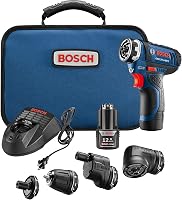
Cordless drills are also popular for overhead work. The Bosch PS31-2A weighs about 1.8 lb, so holding it up during cabinet or ceiling work tires your arm less.
What's the difference between a cordless drill and an impact driver?
A cordless drill is a general-purpose hole driller and screw driver; an impact driver adds rapid hammering to the rotation. The drill wins when you need a chuck for many bit types and controlled torque.
The impact driver wins on long screws and hard fastening.
An impact driver delivers short blows as it turns, so it seats long screws with less wrist strain. It usually has a hex bit holder instead of a chuck.
That makes bit changes quick but limits it to hex-shank accessories.
Many workshops own both. A drill handles holes and delicate screw work, while the impact driver takes the heavy driving.
For a single tool that does a bit of everything, the drill is the safer first buy.
Should you choose a 12V, 18V or 20V cordless drill?
Pick 12V for light work and overhead reach, and 18V or 20V for heavier drilling and driving. The class you choose should match the jobs you do most, not the biggest number on the box.
A 12V drill is compact and light. The Bosch PS31-2A delivers 265 in-lb of max torque with two speeds of 0-350 and 0-1,300 rpm and 20 plus 1 clutch settings.
Its 7 in head length lets it fit into tight spots.
An 18V or 20V drill brings more power. The DeWalt DCD771C2 runs a high-performance motor rated at 300 unit watts out, with a two-speed transmission of 0-450 and 1,500 rpm.
It has a 1/2 in ratcheting chuck and a lightweight body for a 20V tool.
The Black+Decker LD120VA sits in the 20V class at a lower price tier. It uses a 24 position clutch to prevent stripping screws and comes with a 30-piece bit set.
A soft grip handle adds comfort during longer jobs.
If light weight and small size matter most, start with the 12V drill class. For more torque in thick wood or repeated drilling, the 20V class is the better fit.
Compare specific models in our guide to the best Bosch cordless drills if you like that brand.
What does brushless mean on a cordless drill?
A brushless drill uses electronic commutation instead of carbon brushes, so the motor runs cooler and more efficiently in most designs. That can mean more work per battery charge and less maintenance over time.
A brushed motor passes current through carbon brushes that rub against a spinning commutator. The brushes wear over time.
A brushless motor switches current electronically, so there's no brush contact to wear.
The trade-off is cost. Brushless drills usually sit in a higher price tier than brushed models.
For everyday home use, a brushed drill still handles drilling and driving fine. For long runs or a tool you'll use often, the efficiency of a brushless drill is worth considering.
What should you check before buying a cordless drill?
Check the battery class, the chuck size, the clutch settings and whether the kit includes a charger. Those four details decide what the drill can do and whether you can use it out of the box.
Battery class sets the power level and the weight. Chuck size sets your bit range, with 1/2 in taking larger shanks than 3/8 in.
Clutch settings give you control for screw driving. A kit with batteries and a charger saves you buying them separately.
If you're brand loyal, the battery platform matters too. Packs often fit only tools from the same maker's system.
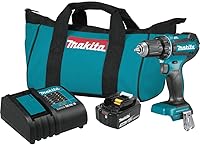
Our guide to the best Makita cordless drills shows how one brand's batteries carry across its tools.
What's the bottom line on cordless drills?
A cordless drill is a battery-powered drill for boring holes and driving screws without a wall outlet. For most home and light job-site work, the highest-scoring pick here, the DeWalt DCD771C2, covers the widest range of jobs.
Its 20V motor, 1/2 in chuck and two-speed transmission handle drilling and driving in wood and metal.
Choose the Bosch PS31-2A if you do lots of overhead work and want a light 12V tool. Pick the Black+Decker LD120VA if you want a 20V drill with a bit set in the box.
If you often drill thick material and want more runtime per charge, weigh a brushless model against these brushed picks.
Frequently asked questions
Can a cordless drill drive screws as well as drill holes?
Yes. Most cordless drills are drill/drivers, with a clutch ring that slips once a screw seats so you don't overdrive it.
Switch the clutch to a drill setting for boring holes, or set a low number for light screw work.
How long does a cordless drill battery last?
Runtime depends on the task, the battery size and the drill's motor, so there's no single number. The batteries hold a charge for long periods between jobs when stored, and a spare pack or a kit with two batteries keeps you working without a wait.
What size cordless drill do I need for home use?
A 12V drill handles light jobs like assembling furniture and hanging shelves. An 18V or 20V drill gives more torque and speed for decking, framing and heavy drilling.
Pick the lighter 12V class for overhead work and the larger class for repeated holes in thick wood.
Do cordless drills need special bits?
No. A cordless drill's chuck holds the same round-shank twist, brad-point and screwdriver bits as a corded drill.
The chuck size sets the largest shank it grips, so check that your bits fit within it.
Is a brushless cordless drill better than a brushed one?
A brushless motor uses electronic commutation instead of carbon brushes, so it runs cooler and more efficiently in most designs. That can stretch runtime per charge.
Brushed motors cost less and still handle everyday drilling and driving.